Weda Bay, September 22, 2026 – PT Indonesia Weda Bay Industrial Park (IWIP) and PT Weda Bay Nickel (WBN) are expanding their mangrove rehabilitation program in North Maluku as part of their commitment to strengthening coastal ecosystems. Following its implementation in Kobe Village, Central Halmahera Regency, the program has now been extended to Sil Village and Sowoli Village in East Halmahera Regency.
Launched in 2024, the rehabilitation initiative forms part of IWIP and WBN’s roadmap to gradually plant one million mangrove seedlings. As of September 2026, a total of 36,500 seedlings have been planted across several rehabilitation sites.
Fuad Albar, Deputy Manager of External Relations at IWIP, said that mangrove rehabilitation is part of IWIP and WBN’s broader efforts to support the sustainability of coastal environments. Mangroves play a critical role in protecting shorelines from erosion, providing habitats for diverse flora and fauna, and absorbing and storing carbon.
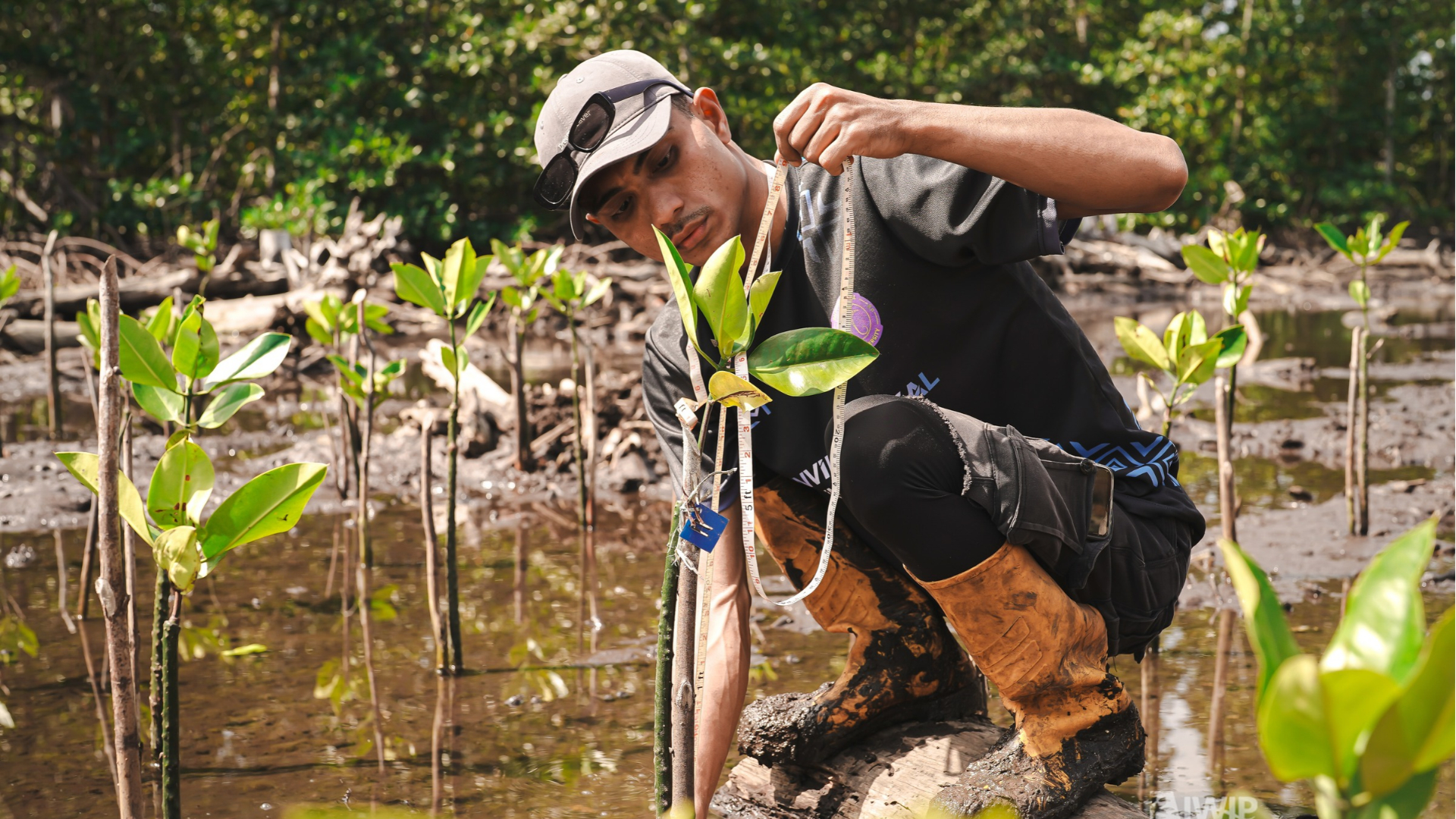
“Through this mangrove rehabilitation program, we aim to ensure that restored areas can grow successfully and deliver long-term benefits to coastal ecosystems. Therefore, our efforts go beyond planting activities and include seedling cultivation, maintenance, and monitoring, with active community participation throughout the process,” said Fuad.
As the program expands to new locations, IWIP and WBN tailor their rehabilitation approach to the specific characteristics of each site, including land conditions, mangrove species selection, planting methods, and maintenance practices. This approach is designed to maximize plant survival rates and support the sustainable management of rehabilitation areas.
IWIP and WBN are also ensuring a sustainable supply of seedlings through the development of village-level nurseries. Seedlings produced in Kobe Village are being used to support planting activities in Sil and Sowoli villages. In the next phase, nurseries in both villages will be further developed to provide seedlings for future rehabilitation sites. During the initial stage, seedling provision is carried out in collaboration with village governments and the Watershed Management Agency (BPDAS), with species selection and seedling requirements tailored to the environmental conditions of each area.
The program’s sustainability is further reinforced through the involvement of local communities. Residents participate in various stages of the initiative, including nursery development, planting, maintenance, and mangrove monitoring. In addition to supporting environmental restoration, the program creates employment opportunities for local communities while providing valuable experience and skills in mangrove rehabilitation management. Workers participating in the program are also covered by Indonesia’s national social security scheme (BPJS) throughout the implementation period.
Sowoli Village Head Rudi Manan expressed his appreciation for the support provided by IWIP to the local community through the mangrove rehabilitation program.
“We are grateful to IWIP for selecting Sowoli Village as one of the beneficiaries of this mangrove planting initiative. We are fully committed to supporting the program and hope that similar collaborations can continue in the future, not only in environmental initiatives but also in other sectors that can contribute to improving community welfare,” he said during the launch of the mangrove planting expansion program in Sowoli Village on November 9, 2025.